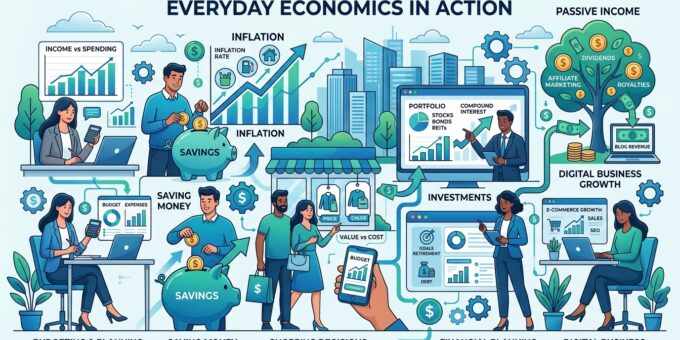
Many people think economics is a complicated subject reserved for professors, investors, or government officials. In reality, economics affects every decision we make. From buying groceries and saving money to starting an online business or planning for retirement, economic principles shape our daily lives.
This guide will make Economics Explained Simply: A Practical Guide for Everyday Life easy to understand. You’ll learn how economic concepts influence spending, earning, investing, and building long-term financial security.
What Is Economics?
Economics is the study of how people, businesses, and governments use limited resources to satisfy unlimited wants and needs. Since resources such as money, time, and labor are limited, individuals must make choices every day.
For example, if you spend money on a new smartphone, you may have less money available for entertainment or savings. Economics helps explain these trade-offs and why they matter.
At its core, economics answers three basic questions:
- What should be produced?
- How should it be produced?
- Who should receive it?
Understanding these questions can help you make smarter financial decisions and improve your overall quality of life.
Why Economics Matters in Everyday Life
Economics is not just about stock markets or national budgets. It directly impacts household finances, employment opportunities, and purchasing power.
Everyday examples include:
- Choosing between products based on price.
- Deciding whether to save or spend money.
- Comparing job offers and salaries.
- Starting an online business.
- Building streams of passive income.
When you understand basic economic principles, you become better equipped to make informed choices.
Supply and Demand Made Simple
One of the most important concepts in economics is supply and demand.
What Is Demand?
Demand refers to how much consumers want a product or service. Generally, when prices decrease, demand increases.
For example, if a popular smartphone receives a discount, more people may decide to purchase it.
What Is Supply?
Supply refers to how much of a product or service producers are willing to sell. When prices rise, suppliers are often willing to produce more.
How Supply and Demand Work Together
Prices are largely determined by the balance between supply and demand. If demand exceeds supply, prices usually increase. If supply exceeds demand, prices often fall.
This principle explains why airline tickets, housing prices, and even grocery costs fluctuate over time.
Opportunity Cost: The Hidden Cost of Every Decision
Opportunity cost is one of the most practical economic concepts. It represents what you give up when choosing one option over another.
Imagine you have $1,000. You can spend it on a vacation or invest it. If you choose the vacation, the potential investment returns become your opportunity cost.
Understanding opportunity cost helps people evaluate decisions more carefully and prioritize long-term financial goals.
The Role of Inflation in Your Finances
Inflation occurs when the general price level of goods and services rises over time.
As inflation increases:
- Your money buys fewer goods.
- Living expenses become higher.
- Savings lose purchasing power.
For example, a product costing $100 today may cost $110 next year if inflation rises by 10%.
This is why many financial experts encourage investing rather than leaving all money in low-interest savings accounts.
How Economics Influences Personal Budgeting
Budgeting is essentially applied economics. Every household operates with limited resources and must decide how to allocate income effectively.
A practical budget generally includes:
- Housing expenses
- Food and groceries
- Transportation costs
- Savings and investments
- Emergency funds
- Entertainment spending
Economic thinking helps individuals determine which expenses are necessary and which can be reduced.
Using a structured budget can improve financial stability and reduce debt over time.
Understanding Income and Wealth Creation
Economics teaches that wealth is often created through productivity and value creation.
Individuals can increase income by:
- Developing specialized skills.
- Pursuing higher education.
- Starting a business.
- Investing wisely.
- Creating multiple income streams.
Many people today focus on building passive income sources to supplement traditional employment.
Examples include dividend investing, rental properties, digital products, and affiliate marketing.
The Digital Economy and New Opportunities
The internet has transformed modern economics. Digital platforms allow entrepreneurs to reach customers worldwide with minimal startup costs.
Popular digital business models include:
- Affiliate marketing
- E-commerce stores
- Content creation
- Freelancing
- Online education
- Software services
These opportunities have enabled millions of people to generate additional income and create flexible careers.
Affiliate Marketing vs Dropshipping
Many aspiring entrepreneurs compare affiliate vs dropshipping when looking for online income opportunities.
Affiliate Marketing
In affiliate marketing, you promote products or services and earn commissions on successful sales. You do not handle inventory, shipping, or customer support.
Benefits include:
- Low startup costs
- Minimal risk
- Flexible work schedule
- Potential for recurring commissions
Dropshipping Business
A dropshipping business allows entrepreneurs to sell products without maintaining inventory. Suppliers ship products directly to customers.
Benefits include:
- Scalable operations
- Wide product selection
- Lower inventory costs
However, competition can be intense, and profit margins may be lower.
When evaluating affiliate vs dropshipping, your choice depends on business goals, available resources, and desired involvement level.
Economics and Investing
Investing is another area where economics plays a major role.
Investors study economic indicators such as:
- Inflation rates
- Interest rates
- Employment data
- Consumer spending
- Economic growth
These factors influence stock prices, real estate markets, and investment returns.
Even basic knowledge of economics can help investors make more informed decisions and manage risk effectively.
The Importance of Financial Literacy
Financial literacy and economic understanding often go hand in hand. People who understand economic concepts are more likely to:
- Save consistently.
- Avoid excessive debt.
- Invest strategically.
- Build emergency funds.
- Create long-term wealth.
Financial literacy empowers individuals to take control of their financial futures rather than reacting to economic changes without preparation.
How Governments Use Economics
Governments rely on economic policies to promote growth, reduce unemployment, and maintain stable prices.
Common economic tools include:
- Tax policies
- Government spending
- Interest rate adjustments
- Infrastructure investments
These decisions affect businesses, consumers, and investors alike. Understanding economic policy helps citizens better interpret financial news and market trends.
Practical Economic Tips for Everyday Life
You do not need an economics degree to benefit from economic principles.
Consider these practical strategies:
- Create and follow a monthly budget.
- Track spending habits regularly.
- Invest consistently for long-term growth.
- Build multiple income streams.
- Develop valuable professional skills.
- Understand opportunity costs before major purchases.
- Explore opportunities in affiliate marketing or a dropshipping business.
Small improvements in financial decision-making can produce significant long-term benefits.
Conclusion
Economics Explained Simply: A Practical Guide for Everyday Life demonstrates that economics is far more than a classroom subject. It influences how we earn, spend, save, invest, and build wealth.
By understanding concepts such as supply and demand, inflation, opportunity cost, and financial literacy, individuals can make smarter decisions and improve their financial well-being.
Whether you’re managing household expenses, building passive income, launching an online business, comparing affiliate vs dropshipping, or exploring investment opportunities, economic knowledge provides a valuable foundation for success.
For additional financial education, visit Investopedia and World Bank. You can also explore related resources on your website about personal finance, investing, and entrepreneurship to deepen your understanding.
