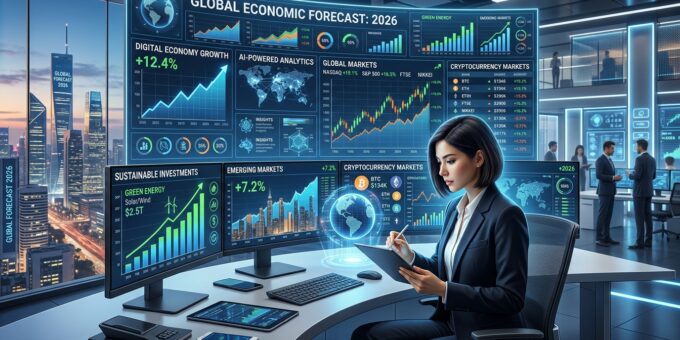
The global economy is entering a new phase of transformation. Governments, businesses, and investors are adapting to rapid technological innovation, changing consumer behavior, geopolitical shifts, and evolving financial systems. Understanding the Top Economics Trends Shaping Global Markets in 2026 is essential for entrepreneurs, investors, policymakers, and anyone interested in economic growth.
As economies become increasingly interconnected, market movements in one region can quickly influence opportunities and risks across the globe. In this article, we explore the most important economic trends expected to shape global markets throughout 2026 and beyond.
1. Artificial Intelligence Driving Economic Growth
Artificial intelligence (AI) continues to be one of the strongest drivers of economic expansion. Businesses across industries are investing heavily in automation, machine learning, and predictive analytics to improve efficiency and reduce operational costs.
AI-powered solutions are transforming manufacturing, healthcare, finance, retail, and logistics. Companies that successfully integrate AI technologies are expected to gain a competitive advantage through improved productivity and faster decision-making.
As AI adoption accelerates, economists predict significant contributions to global GDP growth. The technology is also creating new opportunities for entrepreneurs building an online business and digital service platforms.
2. The Rise of Digital Economies
Digital transformation remains a key economic trend in 2026. E-commerce, remote work, cloud computing, and digital payments are becoming central components of modern economies.
Consumers increasingly prefer online transactions due to convenience and accessibility. As a result, businesses are investing more in digital infrastructure and customer experience.
This shift creates opportunities for individuals seeking passive income through digital products, content creation, and internet-based ventures. Digital economies are expected to contribute a larger share of global economic output than ever before.
3. Central Bank Policy and Interest Rate Adjustments
Monetary policy remains one of the most influential factors affecting global markets. Central banks continue balancing inflation control with economic growth objectives.
Many economies experienced inflationary pressures in previous years. In 2026, policymakers are expected to carefully adjust interest rates to maintain stability while supporting investment and employment.
Interest rate decisions impact borrowing costs, housing markets, stock valuations, and business expansion plans. Investors closely monitor central bank announcements because even small policy changes can significantly affect financial markets.
4. Sustainable Finance and Green Investments
Sustainability is no longer a niche consideration. It has become a major economic force influencing investment decisions worldwide.
Governments are introducing regulations encouraging renewable energy, carbon reduction, and environmentally responsible business practices. Investors increasingly allocate capital toward companies demonstrating strong environmental, social, and governance (ESG) performance.
Green bonds, renewable energy projects, and sustainable infrastructure investments are expected to attract substantial funding in 2026. These initiatives create long-term economic opportunities while addressing environmental challenges.
5. Supply Chain Diversification
Global supply chains have undergone significant restructuring in recent years. Companies are reducing dependence on single-source suppliers and exploring alternative manufacturing locations.
This diversification strategy helps businesses improve resilience against geopolitical tensions, transportation disruptions, and economic uncertainty.
Countries attracting new manufacturing investments may experience stronger job growth and increased foreign direct investment. Supply chain optimization remains a priority for multinational corporations seeking long-term stability.
6. Growth of Emerging Markets
Emerging economies continue to play a larger role in global economic expansion. Countries across Asia, Africa, and Latin America are experiencing rising consumer demand, urbanization, and technological adoption.
These markets offer significant growth opportunities for international businesses and investors. Expanding middle-class populations contribute to increased spending on goods, services, education, and technology.
Many economists expect emerging markets to contribute a substantial portion of global GDP growth throughout 2026 and beyond.
7. Cryptocurrency and Digital Asset Evolution
Digital assets remain a major topic in global economics. While regulatory frameworks continue evolving, cryptocurrencies and blockchain technologies are becoming increasingly integrated into financial systems.
Central Bank Digital Currencies (CBDCs) are gaining attention as governments explore digital alternatives to traditional cash systems. Meanwhile, blockchain applications extend beyond finance into supply chain management, healthcare, and data security.
Although volatility remains a concern, digital assets continue influencing investment strategies and financial innovation worldwide.
8. Labor Market Transformation
The workforce is evolving rapidly due to technological advancements and changing business models. Automation is reshaping traditional jobs while creating demand for new skills.
Companies increasingly prioritize digital literacy, data analysis, cybersecurity, and AI-related expertise. Remote and hybrid work arrangements remain common across many industries.
Workers who invest in continuous learning and skill development are likely to benefit from new employment opportunities emerging in the digital economy.
9. E-Commerce and Online Entrepreneurship Expansion
E-commerce continues its remarkable growth trajectory in 2026. Consumers increasingly purchase products and services online, encouraging businesses to strengthen their digital presence.
This trend supports entrepreneurs interested in building an online business through various models, including e-commerce stores, subscription services, and digital marketplaces.
Many individuals are also exploring affiliate marketing as a scalable revenue stream. The growing digital economy provides numerous opportunities to generate passive income through content creation and online platforms.
Affiliate Marketing vs Dropshipping
One frequently discussed topic among online entrepreneurs is affiliate vs dropshipping. Both models offer unique advantages and challenges.
Affiliate marketing allows individuals to earn commissions by promoting products or services without managing inventory. It often requires lower startup costs and can become a source of passive income.
In contrast, a dropshipping business involves selling products directly to customers while suppliers handle inventory and shipping. Although profit margins can be higher, managing customer service and competition often requires additional effort.
Choosing between affiliate vs dropshipping depends on business goals, budget, risk tolerance, and long-term growth strategies.
10. Geopolitical Factors Influencing Markets
Geopolitical developments continue to affect global trade, energy markets, and investment flows. Trade agreements, diplomatic relationships, and regional conflicts can create both opportunities and risks.
Businesses are increasingly incorporating geopolitical analysis into strategic planning. Investors also monitor international developments to identify potential market impacts.
Understanding geopolitical trends helps organizations make informed decisions in an increasingly complex global environment.
11. Consumer Behavior and Economic Adaptation
Consumer preferences continue evolving due to technological innovation, demographic shifts, and economic conditions.
Shoppers increasingly value convenience, personalization, sustainability, and digital experiences. Businesses that adapt quickly to these changing expectations often achieve stronger market performance.
Data-driven decision-making enables companies to better understand customer needs and deliver more relevant products and services.
12. Investment in Infrastructure and Innovation
Governments worldwide are increasing investments in transportation, energy systems, digital infrastructure, and research initiatives.
Infrastructure spending stimulates economic activity, creates employment opportunities, and supports long-term productivity growth.
Innovation-focused investments also encourage technological breakthroughs that can improve efficiency and competitiveness across industries.
What These Trends Mean for Businesses
Businesses that proactively respond to economic trends are better positioned for sustainable growth. Organizations should focus on innovation, digital transformation, workforce development, and operational resilience.
Companies embracing technology and sustainability can strengthen their competitive position while adapting to changing market conditions.
Entrepreneurs should also monitor opportunities emerging from the digital economy, including affiliate marketing, e-commerce, and scalable online business models.
Conclusion
The Top Economics Trends Shaping Global Markets in 2026 highlight a world economy driven by technology, sustainability, digital transformation, and evolving consumer behavior. Artificial intelligence, green investments, emerging markets, digital assets, and infrastructure development are expected to play major roles in future economic growth.
For businesses, investors, and entrepreneurs, staying informed about these trends is essential. Those who adapt quickly and embrace innovation will be best positioned to capitalize on new opportunities while navigating economic uncertainty.
As global markets continue evolving, understanding these economic forces can help individuals and organizations make smarter financial and strategic decisions in 2026 and beyond.
