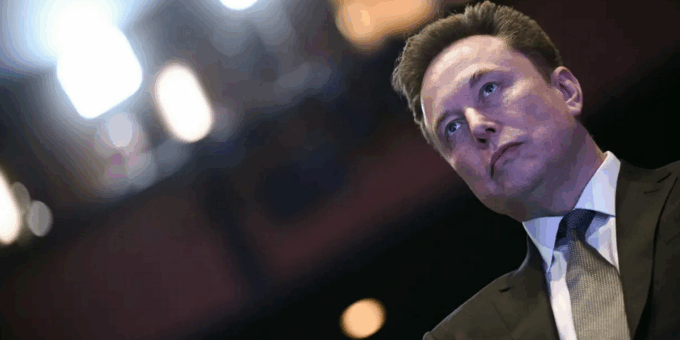
In a bold and provocative statement, Elon Musk says AI will end America’s debt crisis within 3 years. The claim has stirred discussion across political, financial, and tech circles — and for good reason. With the U.S. national debt now exceeding $38 trillion, traditional approaches such as spending cuts or tax hikes are struggling to keep pace. But Musk proposes a very different solution: massive growth in productivity via artificial intelligence (AI) and robotics.
Why Musk Believes AI Is the Answer
According to recent reports, Musk argued on a public podcast that rising debt and surging interest payments have pushed the country into a dangerous fiscal position. He noted that interest payments alone now exceed key budget items like defense spending. :contentReference[oaicite:0]{index=0}
Traditional political fixes — trimming government programs, raising taxes, or curbing spending — are unlikely to sustainably solve the problem without serious economic pain. Instead, Musk proposes a different path: leverage a nationwide, economy-wide technological transformation powered by AI and robotics to dramatically increase output. :contentReference[oaicite:1]{index=1}
He believes that if goods and services output grows faster than the money supply, the result could be deflation — or at least disinflation — which would reduce the real burden of debt. In his words: “In three years or less … my guess is goods and services output will exceed the rate of inflation … maybe after those three years you have deflation and then interest rates go to zero, and then the debt is a smaller problem than it is.” :contentReference[oaicite:2]{index=2}
How AI and Robotics Could Transform the Economy
1. Boosting Productivity at Scale
We’ve seen previous waves of automation — from electrification to computers — reshape economies dramatically. Musk argues AI + robotics is the next leap. :contentReference[oaicite:3]{index=3}
For sectors heavily dependent on labor (manufacturing, logistics, services), robots and AI could reduce labor-cost burdens, increase output, and improve consistency. That would make American production far more competitive globally — encouraging reshoring of industries and reinvestment in U.S.-based businesses. :contentReference[oaicite:4]{index=4}
2. Lower Cost of Goods and Services
If AI-driven production reduces the cost of goods and services, consumers benefit. Lower costs combined with higher output may lead to deflationary pressure. This would directly increase the real value of wages and reduce the relative burden of debt — a dynamic Musk seems to foresee. :contentReference[oaicite:5]{index=5}
3. Potential for “Optional Work” and Radical Economic Change
Musk has even speculated that in an AI-dominated future, many forms of human labor could become optional. In such a scenario, basic needs might be met with minimal work — effectively a form of universal prosperity. :contentReference[oaicite:6]{index=6}
While that future remains speculative, the core idea is that automation could unlock a wave of economic expansion sufficient to outpace debt growth — positioning AI as the only viable path out of the current debt crisis. :contentReference[oaicite:7]{index=7}
Criticisms and Risks — Why Many Are Skeptical
Despite widespread interest in Musk’s vision, many economists and policy experts caution that this optimistic scenario hinges on several uncertain assumptions.
- Speed of adoption: For AI and robotics to impact national debt within three years, deployment would need to be rapid and wide-reaching. Much of the U.S. economy still relies on human labor and legacy systems.
- Deflation vs. disinflation: While Musk expects deflation, most mainstream economists view AI-driven changes as likely to produce disinflation (slower inflation) rather than outright falling price levels. That might not ease debt burdens as much as Musk hopes. :contentReference[oaicite:8]{index=8}
- Income inequality and job displacement: Massive automation risks displacing large numbers of workers. Without proper policies — such as retraining, universal basic income, or safety nets — this could worsen inequality.
- Structural and political constraints: Even if productivity surges, current budget allocations (e.g., social security, defense, healthcare) are entrenched — significant reform would be required to channel gains into debt reduction.
Why This Might Appeal to Online Entrepreneurs — A Hidden Angle
You might wonder: what does this macroeconomic vision have to do with you — especially if you’re running a small business or building income online? Actually — potentially quite a bit. If AI leads to economic expansion and structural change, it could create new opportunities for online business, passive income streams, and digital entrepreneurship.
For example:
- Automation and AI may unlock lower-cost production — meaning less expensive goods and services, which can boost consumer spending and demand. That could benefit affiliate marketing businesses or e-commerce ventures that rely on volume and affordability.
- A broader shift toward digital and smart automation might raise demand for AI-powered services, digital platforms, and remote work — creating more options to build a scalable dropshipping business or digital service side-hustle.
- If traditional employment becomes less stable due to automation, more people may turn to freelance, online, or independent work. That could expand the market for those interested in diversified income strategies, such as combining affiliate vs dropshipping models.
In other words: while the national debt narrative is geopolitical and macroeconomic, the ripple effects could reshape how many individuals earn money. That makes now a potentially strategic moment to explore the landscape of remote work, digital entrepreneurship, and scalable online ventures.
What Needs to Happen for Musk’s Prediction to Come True
For the bold statement “AI will end America’s debt crisis within 3 years” to become reality, several conditions must align:
- Rapid AI & Robotics Deployment: Businesses across sectors need to adopt automation at scale — manufacturing, logistics, services, even government operations.
- Infrastructure & Regulation: The U.S. must build supportive infrastructure and craft regulations that encourage automation while protecting workers — addressing displacement, retraining, and social safety nets.
- Monetary and Fiscal Responsiveness: Policy makers need to adapt fiscal and monetary policies to balance increased output, avoid destabilizing deflation, and ensure debt reduction does not cause social harm.
- Inclusive Growth: Gains from automation must be broadly distributed. If benefits accrue only to corporations or a small elite, societal tensions may rise — undermining long-term stability.
Without those factors aligning, Musk’s vision risks remaining a dramatic forecast rather than a viable plan.
Conclusion: A Vision — Not a Guarantee
It’s undeniable: the idea that AI will end America’s debt crisis within 3 years is visionary — and headline-grabbing. With soaring national debt and mounting interest payments, the traditional tools for fiscal balance are strained. In that context, radical solutions like AI and robotics offer hope for a different path: one driven by productivity, innovation, and economic transformation. :contentReference[oaicite:9]{index=9}
But optimism must be tempered with realism. For Musk’s prediction to come true, widespread adoption, structural reform, and smart policy must converge — a tall order in today’s polarized political climate. Even then, challenges such as job displacement, inequality, and social adaptation could arise.
For individuals, especially entrepreneurs and small business owners, this shifting landscape does create opportunity. As the economy evolves, so too may the way people earn income — presenting chances to build digital ventures, explore remote or AI-enabled work, and create new streams of revenue. Whether you’re interested in online business, affiliate marketing, or a future dropshipping business, now may be a pivotal time to plan strategically.
In short: Musk’s claim is not a guarantee — but it’s a bold call to rethink what’s possible. And at the very least, it’s a reminder that when it comes to national debt, innovation may be the most powerful currency.
